
A massage room for rent should give a licensed wellness professional a quiet, private place to serve clients and the freedom to run an independent business. Look for a secure suite with practical amenities, a professional setting, clear lease terms, and enough flexibility to create a distinctive client experience.
Explore private suite leasing at Salons by JC
Moving from employment, a shared treatment room, or a home-based setup into a private suite is more than a change of address. It is a business decision that affects client trust, daily efficiency, brand presentation, and your ability to grow on your own terms. The right environment should support both excellent bodywork and confident business ownership.
Salons by JC offers private suites for licensed beauty and wellness professionals who want brand independence without building a commercial location from the ground up. You can shape the room around your services, set your own schedule, build direct client relationships, and focus on keeping 100% of profits from your business. Use this guide to evaluate spaces carefully before committing.
What should a massage room for rent include?
A suitable room should support privacy, comfort, sanitation, and smooth movement through every appointment. It does not need to be oversized, but it should give you enough control to create a calm atmosphere and enough practical support to work efficiently. During a tour, confirm that the space includes or can accommodate:
- A closable, secure door that protects client privacy
- Enough room around the massage table for safe, comfortable movement
- Adjustable lighting that can feel calming without limiting visibility
- Electrical outlets placed where equipment can be used safely
- Convenient access to handwashing, restrooms, and sanitation resources
- Storage for clean linens, supplies, personal items, and retail products
- Reliable heating, cooling, and ventilation for client comfort
- A professional arrival experience and clear wayfinding for clients
Think beyond the table itself. Walk through the entire appointment as a client would, from arrival and greeting to intake, treatment, checkout, and departure. A room can look attractive in photos yet create friction if clients cannot find it easily, if clean and used linens cross paths, or if supplies must be retrieved from another area during a session.
Also consider the services you may add later. If you plan to offer hot stones, assisted stretching, aromatherapy, or retail products, make sure the room can support those choices without feeling cluttered. Your first layout should serve today’s business while leaving reasonable room for tomorrow’s opportunities.
Why do quiet and privacy matter for massage professionals?
Quiet and privacy are essential parts of the service, not decorative extras. Clients need to feel comfortable discussing health history, preferences, and areas of concern. They also expect to relax without hearing nearby conversations, loud equipment, or constant hallway activity. A private suite gives you more control over those details.
During a tour, pause inside the room with the door closed. Listen for voices, music, plumbing, foot traffic, and doors opening nearby. Visit at a time when the building is active, because an empty hallway cannot reveal the normal sound environment. Ask what changes you may make to soften sound, such as rugs, upholstered seating, wall decor, or a white-noise device.
Privacy also includes visual and operational boundaries. Confirm that the door closes fully, windows can be covered appropriately, and clients are not exposed while entering or leaving. Decide where intake forms and client information will be stored so confidential details remain protected. These small choices help communicate professionalism before the massage begins.
A private suite also allows you to set the sensory tone. You can choose music, lighting, scent, temperature, and decor that fit your brand rather than accepting a shared room’s default. That consistency can make each appointment feel intentional and help clients recognize the experience as uniquely yours.
Private suite vs. shared or hourly massage room
The best rental format depends on your client volume, schedule, business goals, and need for control. Hourly and shared spaces can reduce commitment, but they may also require repeated setup and limit how fully you can express your brand. A private suite offers greater consistency and independence for an established professional ready to build a long-term business.
| Factor | Private suite | Shared room | Hourly room |
|---|---|---|---|
| Brand control | High; personalize the space around your business | Limited by shared decor and rules | Usually minimal |
| Schedule control | Operate according to your chosen hours and lease terms | Coordinate with other providers | Limited to reserved blocks |
| Setup and storage | Keep an organized, consistent setup | Storage may be divided | Often requires setup each visit |
| Client experience | Consistent and private | May vary by day or provider | Can change by room or booking |
| Business identity | Built around your own brand | Shared with the location or others | Often secondary to the host venue |
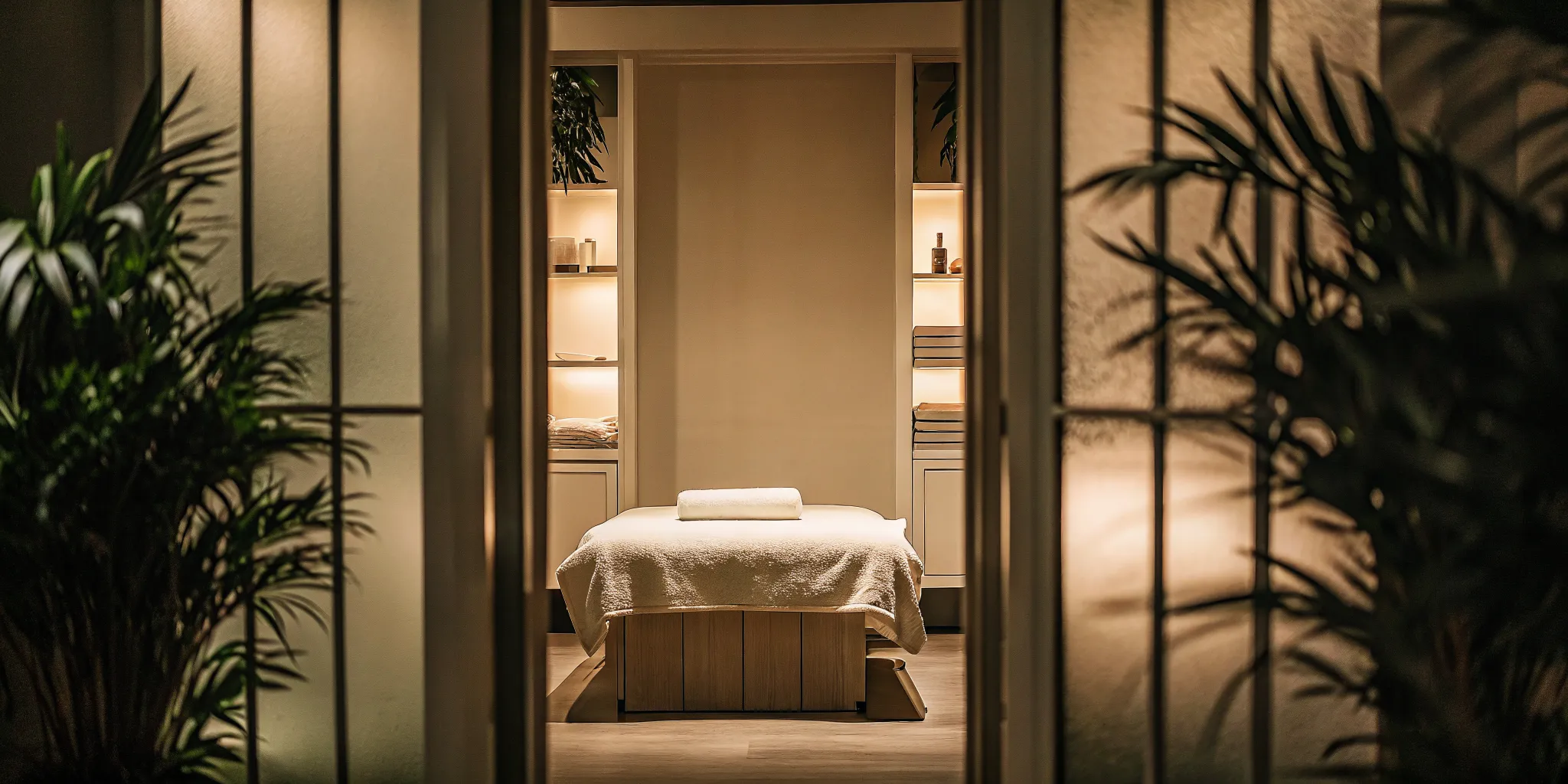
A private suite is especially valuable when clients expect a dependable setting and you want to stop carrying supplies between locations. It lets you create repeatable routines, display your brand, and maintain the room between appointments. For professionals comparing the larger business model, the benefits of salon suite rental extend beyond privacy to autonomy and a more consistent client journey.
That does not mean every private room is automatically the right choice. The lease, environment, amenities, and location still need to fit your business. Evaluate the full operating picture rather than choosing solely by appearance or a single feature.
Book a tour and see how a Salons by JC private suite feels
How can you design a suite for a better client experience?
A strong massage suite feels peaceful to the client and works efficiently for the professional. Start with the essential path around the table. You should be able to move naturally, access supplies, adjust equipment, and maintain appropriate draping without squeezing around furniture. Keep decorative pieces away from areas where they interrupt movement or sanitation.
Create clear zones for each part of the visit
Even in a compact room, distinct zones make the experience feel organized. Establish a welcoming place for consultation and intake, a treatment area centered on the table, concealed storage for supplies, and a simple checkout point. When each item has a purpose and location, resetting the room between appointments becomes easier.
Place frequently used items within reach, but keep the visual field calm. Closed storage can hide bulk supplies and used linens. A few intentional brand elements, such as your colors, logo, credentials, or selected retail products, often feel more polished than many small decorations.
Build comfort without creating clutter
Clients notice temperature, lighting, cleanliness, scent, and sound. Use adjustable elements so you can respond to individual preferences rather than forcing every client into the same environment. Choose surfaces and textiles that can be cleaned appropriately, and create a repeatable reset routine between appointments.
Your room should also reflect the type of bodywork you provide. A sports-focused practice may feel clean and energetic, while a relaxation-focused brand may use softer lighting and warmer textures. Brand independence means making those choices deliberately while maintaining a setting that feels professional and accessible.
How should you evaluate a massage suite during a tour?
A tour is your opportunity to test the room as a workplace, not simply admire it. Bring a short checklist and take notes immediately after each visit. If possible, tour more than once or at a representative time so you can judge traffic, parking, sound, and the overall client experience under normal conditions.
- Trace the client journey. Start outside, locate parking, enter the building, find the suite, and assess how comfortable arrival feels.
- Test the room. Close the door, listen for noise, inspect lighting and outlets, and visualize your table and storage.
- Review daily operations. Confirm restroom access, handwashing options, waste handling, laundry plans, security, and access hours.
- Ask about personalization. Learn what you may change, display, mount, or bring into the suite before planning your design.
- Discuss support and terms. Understand included amenities, building support, lease responsibilities, and the process for getting started.
Bring measurements for your table and any must-have equipment. Sketch the room or photograph it if permitted, then map the layout before signing. Consider whether a client using a mobility aid could navigate the route and whether the setup supports your own physical comfort across a full day of appointments.
Location matters as much as the room. Think about where current and ideal clients live or work, how they travel, and whether the setting feels aligned with your brand. Professionals exploring available markets can review salon suites for rent near them and then schedule a tour to evaluate the specific environment.
What lease terms and business details should you review?
A room may look perfect and still be a poor business fit if the terms are unclear. Ask for the full agreement and review it carefully before committing. Make sure you understand the lease duration, payment schedule, deposit requirements, included services, renewal process, access rules, insurance expectations, and responsibilities for maintenance or damage.
Do not compare spaces using rent alone. List the separate expenses and tasks each option may require, such as utilities, internet, furniture, cleaning, repairs, reception coverage, security, or common-area upkeep. A clear comparison helps you understand the actual operating commitment without relying on assumptions or unverified pricing.
Confirm that your professional license, insurance, and intended services meet applicable requirements. Rules can vary by jurisdiction and by service, so consult the relevant licensing authority and qualified advisors when needed. Also ask what documentation the property requires before move-in and whether there are restrictions on products, equipment, signage, or service types.
Then build a conservative business plan. Estimate how many appointments you can serve comfortably, how much time you need between sessions, and how the space supports retention and referrals. Include time for administration, marketing, cleaning, and professional development. Independence is most rewarding when the operational plan is realistic.
Plan the transition for your clients as carefully as the financial side. Decide when you will announce the move, how clients will receive directions, and what details they need before their first visit. Update booking confirmations, intake instructions, and business listings so the arrival experience is simple. A clear communication plan helps loyal clients feel confident while giving you a polished story to share with new prospects.
It is also useful to define the measures that will tell you whether the suite is supporting your goals. Track rebooking, referrals, schedule utilization, retail interest, and client feedback. These signals can help you refine hours, services, room setup, and marketing while staying focused on sustainable growth rather than filling every available minute.
Why consider Salons by JC for your massage business?
Salons by JC is designed for licensed beauty and wellness professionals who want to operate independently in private suites. Instead of blending into a traditional workplace or generic shared room, you can build your own brand, set the tone of your client experience, and run your business with greater control.
The model supports brand independence while providing premium amenities and a full-time Concierge Manager. That combination can help create a polished environment for clients while allowing you to concentrate on your services and business. You remain responsible for your own practice and client relationships, with the freedom to make decisions that fit your goals.
For massage professionals, a private Salons by JC suite can support consistent setup, private consultations, secure storage, and a recognizable experience clients return to. You can decorate around your brand, choose your service menu, manage your schedule, and focus on keeping 100% of profits. The result is a space that can feel like your own business rather than a room borrowed for the hour.
Before choosing any location, tour it and ask detailed questions. The right fit should serve your clients, support your workflow, and make you feel confident about the next stage of your career. A thoughtful decision now can give your independent practice a stronger foundation.
Frequently asked questions
How much does a massage room for rent cost?
Costs vary by location, room type, lease terms, amenities, and included services. Ask for a complete explanation of the agreement and what is included, then compare the total operating commitment rather than rent alone. Salons by JC can provide current details for the specific location you are considering.
What should I look for before renting a massage room?
Prioritize privacy, sound control, secure access, ventilation, practical storage, sanitation access, client-friendly arrival, and clear lease terms. Tour during an active period, test the room with the door closed, and map your table and equipment before deciding.
Can I customize a private massage suite?
Customization rules depend on the location and agreement, so ask what changes are permitted before planning. A private suite can offer meaningful control over decor, lighting, music, layout, and brand presentation, helping you create a consistent experience that reflects your practice.
What are the benefits of renting at Salons by JC?
Salons by JC gives licensed beauty and wellness professionals access to private suites, premium amenities, a full-time Concierge Manager, and the freedom to operate under their own brands. Massage professionals can manage their schedules, shape the client experience, build direct relationships, and focus on keeping 100% of profits.
Choosing a massage room is ultimately about finding a place where excellent service and business independence can grow together. Evaluate the room, the client journey, the support, and the agreement with equal care. When those pieces align, your suite can become a professional home for the brand and career you want to build.