
A busy chair can still leave your business boxed in by someone else’s rules. Moving into a private suite replaces an open floor with a space built around your clients, brand, and goals.
Ready to see what a private suite looks like? Book a tour at a Salons by JC location near you.
Salon chair rental gives an independent beauty professional a station inside an existing salon, often with a recurring fee and shared-space rules. It can reduce startup demands, but the salon owner may still control the setting, dress code, meetings, and parts of the daily experience. A private salon suite gives you a separate space for one-on-one services, along with greater control over your hours, pricing, branding, and client relationships. That privacy can support a more personal experience while giving your business room to grow on your terms. For established professionals ready to take the next step, suite ownership can offer more autonomy and the ability to retain service revenue and product sales.
Choosing between the two models starts with a clear look at how each one shapes your working day and long-term business. Salon chair rental versus a private salon suite lays out the practical differences in control, privacy, support, and profit. The path begins with
Salon chair rental versus a private salon suite
Salon chair rental usually means paying recurring rent to use a workstation inside an established salon. You serve your own clients, but you work on an open floor shared with other beauty professionals. The salon owner may also set rules for how the wider space operates.
What each rental model means
Chair rental can be a practical step for a professional with loyal clients who wants more independence. A beauty school overview notes that chair renters need a solid client base and must work well with the salon owner or manager. The renter gains a place to work without taking on an entire salon space.
A private salon suite is an enclosed space where one beauty professional runs an independent business. The owner can shape the room, service menu, prices, schedule, and client experience. Moving beyond the salon chair rental model gives the professional more control over daily choices and long-term plans.
Key differences side by side
The main difference is the level of control over the work setting. A chair renter works within someone else’s salon environment. A suite owner creates a distinct space for their own business. That change affects privacy, brand choices, support, and the way clients experience each visit.
| Comparison point | Salon chair rental | Private salon suite |
|---|---|---|
| Space | Workstation on a shared salon floor | Enclosed room for one independent business |
| Privacy | Conversations and services happen near other people | One-on-one setting with fewer interruptions |
| Control | Business choices may follow salon rules | Owner sets the room, schedule, services, and prices |
| Support | Depends on the salon owner or manager | Location support can help with shared-site needs |
| Business model | Independent renter inside another salon | Independent owner with a private business space |
Support also looks different across the two models. A chair renter may rely on the salon owner for shared-space decisions and policies. At Salons by JC, suite owners have access to an on-site Concierge Manager. This manager supports the location while each owner runs their business.
Which setting fits your business?
The right choice depends on how much control and privacy your business needs. Chair rental may suit a professional who wants a familiar salon floor and fewer choices about the space. A private suite may fit someone ready to build a clear brand and manage the full client experience.
Think about your client base, service needs, budget, and comfort with business tasks before choosing. Also consider whether private consultations would improve the experience for your clients. These factors show whether shared-floor access or a private room better supports your next stage.
How much privacy does each model provide?
Salon chair rental usually places your workstation on an open floor beside other beauty professionals. That shared setup can feel social and active, but it offers little control over nearby conversations, noise, and movement. Clients may hear other appointments or see people pass during their service.
For routine appointments, some clients may enjoy the energy of a shared salon. Yet an open floor can make private talks harder and distract from a calm, focused visit. The right choice depends on your services, your clients, and the experience tied to your brand.
The open-floor chair rental setting
A chair renter has a dedicated station, not a separate room. Screens or the salon layout may offer some separation, but they do not create full privacy. The salon owner also controls much of the shared setting, including music, lighting, traffic flow, and common areas.
That setup can limit how closely the space reflects your own brand. By contrast, salon owners have creative freedom to shape their services, branding, and ambiance. A private suite brings more of that control into each client visit.
Private space for personal services
A private suite creates a clear boundary between your business and the activity outside. You can close the door, lower distractions, and speak with one client at a time. This setting supports focused consultations about goals, service history, care needs, and other personal topics.
Privacy can be useful for services that involve changing clothes, close skin contact, or detailed before-and-after discussions. It may also help clients who prefer less noise or fewer people around them. A controlled room makes it easier to keep the visit calm from arrival through checkout.
The suite model also lets you plan the full environment around your service style. You can choose the room layout, decor, music, and pace without matching the rhythm of an open salon. Professionals weighing the salon chair rental model against a suite should consider how much control their clients expect.
Privacy as part of the client experience
Privacy is not only about keeping a conversation out of earshot. It affects how comfortable clients feel asking questions, sharing concerns, and taking part in a consultation. It can also shape whether the visit feels busy and public or quiet and personal.
Consider how each model fits the moments that matter most in your appointments:
- Consultations: A closed space supports direct talks without nearby clients listening.
- Personal services: A suite provides separation when a service calls for more discretion.
- Atmosphere: Control over sound, lighting, and foot traffic helps you create a steady setting.
- Brand consistency: A private room lets each detail support the experience you want to provide.
If privacy is central to your service, an open chair may require compromises you cannot fully manage. A suite gives you a more controlled setting for one-on-one care while still placing your business within a professional salon community.
Which option gives you more control over your brand?
A private salon suite gives you more control over how clients see and experience your brand. With salon chair rental, you run your business inside a salon that already has its own look, sound, and rules. The exact limits depend on your rental agreement and the salon owner.
For an experienced beauty professional, those details shape more than the mood of the room. They affect how you serve loyal clients, present your work, and build a business that stands apart. A suite gives you a private setting where each choice can support the same clear brand promise.
Your schedule, services, and prices
Control starts with the parts of your business that clients notice first. In a private suite, you can set your hours, build your service menu, and choose prices that fit your skill and market. You can also decide how much time to allow for consultations, complex services, cleanup, and rebooking.
A salon chair rental may offer some freedom, but the host salon can still set limits. Its hours, booking process, service standards, or shared-space policies may affect how you work. Before signing, compare those rules with the goals behind your salon chair rental model.
Your retail and client policies
Your retail plan is part of your brand, not just an extra sale. A suite lets you select the products you trust, arrange your display, and explain each recommendation in a private setting. You can create a focused retail experience instead of fitting products into a shared salon display.
You also set the policies that guide your client relationships. These may cover deposits, late arrivals, cancellations, guests, consultations, and follow-up care. Clear policies help clients know what to expect, while giving you a steady way to protect your time.
With chair rental, ask who controls product lines, retail displays, payments, and client rules. Do not assume each choice belongs to you. Professionals who are renting a chair in a standard salon may still need to follow the owner’s wider policies.
Your space and client experience
Decor, lighting, music, scent, and privacy all send a message before a service begins. A chair on an open floor shares those choices with the full salon. Even strong personal branding can compete with nearby conversations, music, signs, and foot traffic.
A private suite gives you a defined space to shape around your ideal client experience. You can choose a calm consultation setting, a bold creative look, or a clean clinical feel for skin services. The result should match your specialty and the clients you want to keep.
This wider control is a core part of ownership. One career college describes salon ownership as the freedom to design your own services, branding, and ambiance. For seasoned professionals, that freedom can turn a personal reputation into a brand clients recognize at every visit.
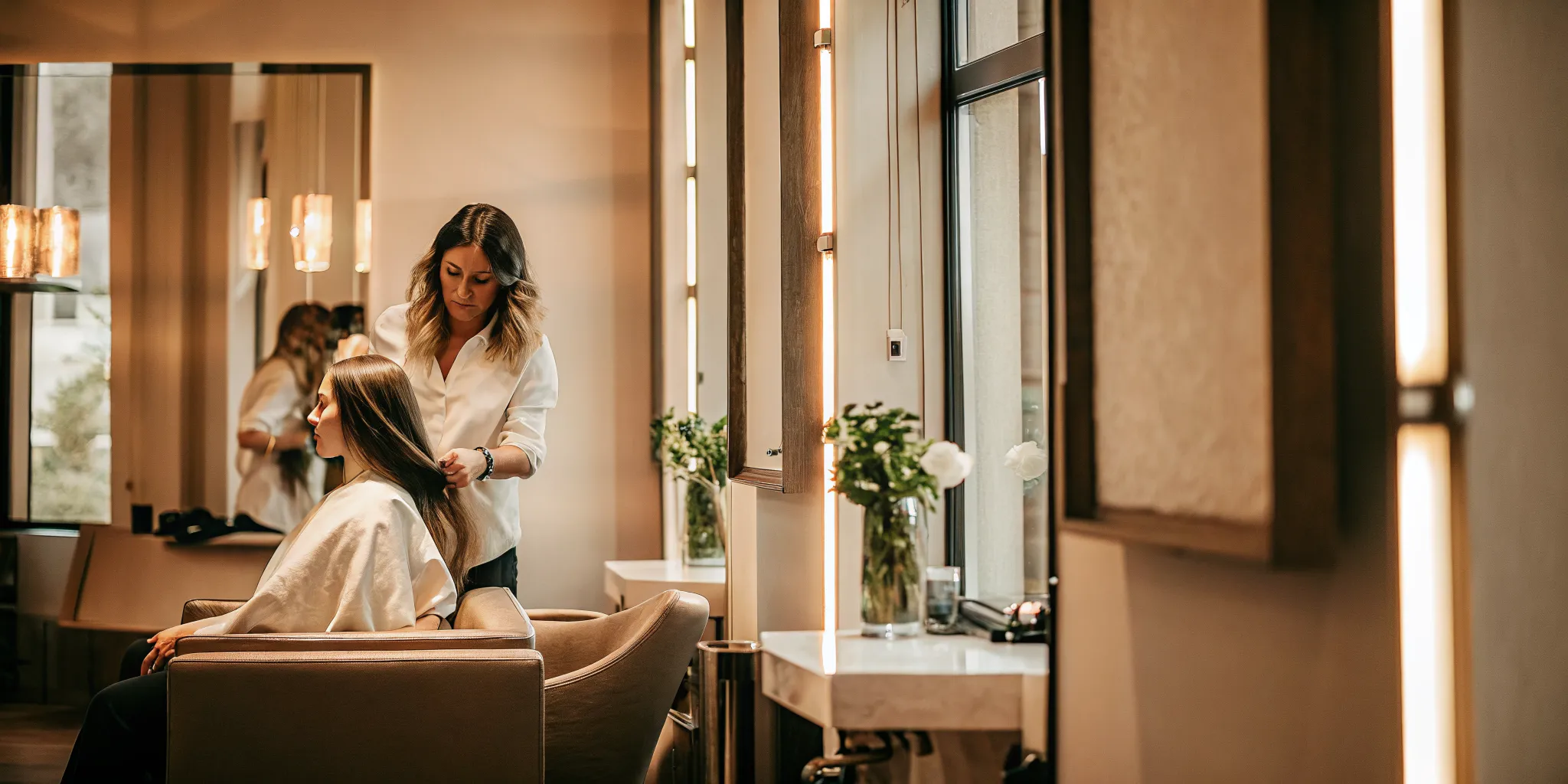
How do salon chair rental and suite rental affect profit?
Profit starts with the revenue you keep after paying the costs of running your business. A chair renter pays a recurring fee for workspace, while a suite renter pays for a private space built around one business. Neither model guarantees a certain income.
Revenue you control
At Salons by JC, suite owners keep 100% of their service revenue and retail product sales. That structure lets each professional set prices, choose services, and decide which products to offer. Yet revenue kept is not the same as profit earned.
A private suite gives you more control over how clients experience your brand. It can also support your plan for moving beyond the salon chair rental model. With that control comes responsibility for attracting clients, managing bookings, and tracking cash flow.
Costs that shape profit
Salon chair rental costs often begin with rent paid to an existing salon. An academic overview of salon ownership notes that chair renters need regular clients and must pay rent for their chair. The exact terms can differ by salon and agreement.
Suite rent covers private space, but other business costs still affect the amount you take home. Depending on your setup, you may need to plan for:
- Professional supplies, tools, and product stock
- Licenses, insurance, taxes, and payment fees
- Booking tools, marketing, and client rewards
- Cleaning, laundry, and other daily needs
Review each rental agreement before comparing costs. Check what the rent includes, which fees may change, and who handles repairs or shared services. A lower base rent may not be the lower-cost choice once every required expense is included.
A practical profit comparison
Profit depends on your sales, prices, client schedule, and total expenses. Start by listing expected monthly revenue, then subtract every fixed and changing cost for each option. Use cautious estimates instead of assuming every appointment slot will be filled.
Also consider how each model may affect growth. A suite gives you room to build a distinct brand and shape a private client experience. Salons by JC’s suite rental survey offers more context on why professionals move from chair rentals to private suites.
Before signing, compare both agreements line by line. Ask what is included, how payments work, and whether any rules limit pricing, retail sales, hours, or branding. Those details can affect profit as much as the stated rent.
What should you compare before signing a rental agreement?
A salon chair rental agreement affects your schedule, costs, client experience, and room to grow. Compare the full contract, not just the weekly rent. A low base price may cover less support, storage, or access than you expect.
Contract terms and total cost
Ask each owner or manager to explain every fee in plain language. The agreement should show the rent, deposit, payment dates, late fees, renewal terms, and exit rules. It should also state who pays for supplies, utilities, laundry, repairs, and booking tools.
Read the rules that shape your independence. Some chair rental settings require professionals to follow owner rules, dress codes, and meetings. These limits appear in Brillare Beauty Institute’s salon career guide. Compare them with your plans for pricing, branding, products, and work hours.
- Calculate the full cost. Add rent, deposits, shared service fees, required products, and other contract charges. Compare the same time period for every option.
- List what is included. Check furniture, sinks, storage, laundry, utilities, Wi-Fi, parking, cleaning, security, and reception support. Note which items cost extra.
- Review access and privacy. Tour during a busy period and check noise, foot traffic, client seating, and private consultation space. Confirm when you may enter.
- Check licenses and insurance. Ask which permits, professional licenses, business records, and insurance documents you must provide. Verify the details with the proper local and state offices.
- Test the support system. Ask who handles maintenance, building concerns, deliveries, and client questions. Find out how fast help is available when a problem affects appointments.
- Plan for growth. Check whether the space can support new services, retail products, equipment, longer hours, or a move into a private suite.
The tour and daily client experience
A tour should show how the space works on a normal day. Bring a written checklist and inspect lighting, cleanliness, storage, noise, safety, and parking. Ask how shared areas are managed and whether another professional can use your station.
Privacy also affects how clients experience consultations and services. A private suite offers more control than an open chair setting. Review the salon chair rental model alongside suite ownership before choosing a space.
Questions before you commit
Ask for a blank agreement before making a deposit. Mark unclear terms and request written answers, since spoken promises may not appear in the final contract. If a clause affects your business or legal duties, consider having a qualified local adviser review it.
Compare how each option fits your current client base and next stage. An agreement should support reliable service today without blocking future changes. Check transfer rules, renewal notice, early exit terms, and any limits on moving clients or business records.
What support comes with a private salon suite?
A private salon suite gives an independent beauty professional a dedicated place to serve clients and run a distinct business. At Salons by JC, that setting pairs a move-in-ready private suite with premium amenities and support from a full-time Concierge Manager. This structure removes many site-related distractions without taking control of the professional’s brand or client relationships.
A move-in-ready private environment
A move-in-ready suite lets professionals focus on setting up their business instead of building a workspace from scratch. The private room also creates a calm setting for one-on-one consultations and services. That privacy gives the professional more control over each client’s visit than a shared salon floor may allow.
Premium amenities support the workday, while the professional decides how the suite should reflect their brand. Exact features can vary, so professionals should review amenities when they explore Salons by JC locations. This step helps them compare each space with their service needs and daily routine.
- A private space for services and client conversations
- A professional setting that is ready for personal brand details
- Shared location amenities that support day-to-day work
Help from a Concierge Manager
Every Salons by JC location has a full-time, on-site Concierge Manager who supports suite owners. The manager helps with location needs and helps maintain a polished setting for professionals and their clients. That support gives owners more time to focus on services, bookings, and business tasks.
The Concierge Manager supports the environment, but does not take over the professional’s business. This balance differs from a salon chair rental model, where the professional works within an existing salon. Suite owners still make the choices that shape their work and client experience.
Control of the brand and client relationship
Support does not mean giving up independence. The professional owns the client relationship and decides how to present services, schedule appointments, and build a brand. An educational guide to salon ownership also notes that owners have creative freedom over services, branding, and atmosphere.
- Choose services, pricing, and working hours
- Create a look and atmosphere that match the brand
- Manage client communication and marketing
- Decide how and when to grow the business
The result is a practical split of roles. Salons by JC supports the physical setting and day-to-day location experience. The suite owner remains responsible for the business decisions and relationships that make the brand distinct.
Are you ready to move from a chair to a suite?
Moving beyond salon chair rental is both a career choice and a business decision. A private suite offers more control, but it also asks you to own each part of the client experience. Look for clear signs in your bookings, finances, work style, and goals before making the move.
A steady base and pricing confidence
Start with your appointment book. A steady group of returning clients can help support rent and other fixed costs during the change. One beauty school guide also recommends building a solid base of regular clients before moving into an independent rental model.
Next, review your prices and service mix. You should know which services sell often, how long they take, and what each one costs to provide. Pricing confidence means you can set rates that reflect your skill while covering supplies, rent, taxes, and slower weeks.
- Your clients book again without frequent discounts or reminders.
- Your schedule stays steady across several months, not just peak seasons.
- You track service costs, sales, tips, and take-home income.
- You can explain your prices with confidence and adjust them when costs change.
Privacy and full business responsibility
A suite may fit if you want a calm, private space for one-on-one talks and services. It also gives you room to shape the mood, music, displays, and service flow. This control can create a more consistent visit for clients who value privacy.
Control comes with daily duties. You will need to manage bookings, payments, supplies, client records, marketing, and basic business planning. Before leaving the salon chair rental model, decide whether you are ready to handle that work or pay for tools that help.
Be honest about how you respond when problems arise. A missed payment, empty time slot, or supply delay becomes yours to solve. If that responsibility feels motivating rather than draining, a private suite may suit your work style.
A clear vision for growth
Readiness is not only about leaving an open salon floor. It is also about knowing what you want to build next. Your vision may include a stronger brand, a focused service menu, retail sales, better hours, or deeper client ties.
Write down what success should look like after six months and after one year. Then compare that vision with your current schedule, savings, and habits. You can also explore available salon suite locations to see which setting supports your clients and plans.
You do not need every detail solved before moving. You do need steady demand, sound pricing, comfort with business duties, and a reason for choosing a private space. Together, those signs show whether your next step has a firm base.
Frequently Asked Questions
Is it better to rent a chair or a private salon suite?
The better choice depends on your client base, budget, and preferred level of control. A chair rental can provide a lower-commitment path to independent work within an established salon. A private suite gives you a separate space, greater control over branding and hours, and a more private client experience. Compare total costs, lease terms, included amenities, and operating rules before deciding.
What is the average cost to rent a chair in a salon?
There is no single average cost for salon chair rental because rates vary by market, salon, contract length, and included amenities. Ask each salon for a written list of rent, deposits, fees, utilities, storage, and shared supplies. Compare the total monthly cost with a private suite quote rather than comparing base rent alone.
Do I need a business license to rent a chair at a salon?
Requirements depend on your state, city, profession, and business structure. Your professional license and any business registrations may be separate requirements. Before signing a chair rental agreement, confirm the rules with the appropriate state licensing board and local government. Also review the agreement to learn which permits, insurance policies, and tax responsibilities belong to you.
Does salon chair rental offer more privacy than a salon suite?
Salon chair rental usually places professionals and clients in a shared, open-floor environment, so conversations and services may have limited privacy. A private suite creates a separate setting for one-on-one appointments and consultations. Salons by JC describes its private salon suite locations as professional spaces designed for individual client consultations.
How does profitability compare between salon chair rental and suite ownership?
Profitability depends on revenue, rent, fees, supplies, taxes, and other operating costs. Chair rental may reduce startup needs, but salon rules can limit pricing, hours, or services. A private suite can provide more control over those decisions and let professionals retain their service and product revenue. Salons by JC reports that professionals often move from chair rentals to private suites for greater income potential and freedom.
Ready to move from chair rental to a private suite?
Staying in a chair rental can keep your privacy, schedule, pricing, and client experience tied to rules that limit your business choices. Starting your search now gives you time to compare locations, review lease details, and plan a smooth move on your own timeline. Waiting longer may delay your chance to build a private, consistent setting that supports stronger client relationships and greater control over daily operations.
Ready to see whether a private suite fits the business you want to run? Book a tour or find a location to compare available suites, ask questions, and choose a setting aligned with your professional goals.