
For an established nail professional, choosing a nail salon suite for rent is not simply a real estate decision. It is an operating-model decision that affects service quality, schedule control, margins, client retention, and the long-term value of your brand. The right private suite should support your current book of business while giving you room to refine the experience clients associate with your name.
Find a Salons by JC location and book a tour to evaluate a private suite in person.
Experienced nail techs already understand sanitation, technique, and client care. The more useful question is whether a prospective suite can support a high-performing independent business without creating avoidable operational friction. Use the criteria below to compare spaces with the same rigor you would use to evaluate a product line, service menu, or major equipment purchase.
What should a nail salon suite for rent include?
A nail salon suite should provide reliable plumbing and power, appropriate ventilation, task lighting, secure access, practical storage, and enough space for an efficient manicure and pedicure workflow. The strongest option also includes transparent lease terms, professional common areas, responsive maintenance, and on-site support that lets you focus on clients and revenue.
Start with the non-negotiables that determine whether you can deliver services safely and consistently. A polished lobby cannot compensate for inadequate electrical capacity, poor air movement, or a layout that forces you to interrupt appointments whenever you need supplies.
Ventilation suited to nail services
Nail services can generate vapors and fine dust, so ventilation deserves more attention than a quick glance at a ceiling vent. Ask how air moves through the suite, whether ventilation is shared or dedicated, and what options exist for source-capture equipment at the workstation. The Occupational Safety and Health Administration recommends ventilation and safe work practices to reduce exposure to nail product chemicals. Review OSHA’s nail salon chemical hazards guidance as you assess a space.
During a tour, notice whether odors linger in halls or neighboring suites. Ask how the property team handles ventilation concerns and whether you may install or use the equipment required by your service mix. Your local licensing authority may impose additional requirements, so verify the rules that apply in your jurisdiction before signing.
Plumbing, electrical capacity, and lighting
Confirm that hot and cold running water is convenient to the workstation and that plumbing supports your sanitation process. Then map outlets against the equipment you use simultaneously, including e-files, curing lamps, task lights, dust collectors, towel warmers, and pedicure equipment. Ask who addresses an outlet or plumbing failure, how quickly repairs are handled, and whether the process is documented in the lease.
General lighting sets the atmosphere, but precise nail work requires focused, color-accurate task lighting. Evaluate natural light, glare, shadows, and where you can position adjustable lamps without obstructing client movement. These details directly affect service quality and physical comfort over a full appointment schedule.
Security, storage, and access
A locking private suite protects inventory, equipment, and client privacy. Ask about building access hours, guest entry procedures, cameras in shared areas, and after-hours protocols. Storage should keep backbar, sanitation supplies, retail inventory, and personal items organized without making the room feel crowded. Adjustable or vertical storage is valuable when you want to preserve floor space.
Design the suite around a profitable service flow
A productive layout reduces unnecessary movement, supports consistent sanitation, and creates a calmer client experience. Before committing, sketch the exact placement of your manicure station, pedicure area, sanitation zone, storage, retail display, and checkout point. Measure your existing equipment rather than relying on visual estimates.

Separate clean, used, and retail zones
Your workflow should make it easy to keep clean implements separate from used items. Place sanitation supplies where they are accessible without dominating the client-facing experience. Store professional-use products apart from retail inventory so fulfillment and inventory counts remain straightforward.
A compact retail display can extend the client relationship between appointments, but it should support your positioning rather than create clutter. Curate products that complement your service menu and place them where clients can browse without interrupting circulation.
Protect your body and your schedule
Ergonomics is a business-continuity issue for a career nail professional. Chair height, table depth, lamp placement, and frequently used storage all influence fatigue. The Oregon Institute of Occupational Health Sciences offers a practical ergonomics guide for nail salon workers that can help inform your setup.
Test the proposed workstation as if you were performing a full service. Check your reach, posture, sightline, and movement around the client. A visually appealing suite that creates strain or adds minutes to every reset will become expensive over time.
Compare the total operating value, not just rent
Weekly rent is only one line in your operating model. Compare each option based on what is included, what you must purchase separately, and how the space may affect revenue. An apparently lower rate can lose its advantage once you add utilities, Wi-Fi, furnishings, repairs, laundry, security, or common-area upkeep.
| Decision factor | Questions to ask | Why it matters |
|---|---|---|
| Included expenses | Are utilities, Wi-Fi, laundry access, and common-area upkeep included? | Clarifies the true monthly operating cost. |
| Lease flexibility | What is the term, renewal process, deposit, and exit policy? | Aligns the commitment with your growth plan. |
| Maintenance | Who handles repairs, and what response time can you expect? | Reduces appointment disruption and surprise costs. |
| Access and security | When can you enter, and how do clients access the building? | Supports your preferred schedule and client experience. |
| Brand control | What can you change inside the suite, and what signage is allowed? | Determines how fully the space can represent your business. |
Model the break-even point
Translate the complete monthly cost into the number of appointments or service hours needed to cover it. Then account for products, processing fees, insurance, taxes, continuing education, and planned time off. This gives you a more useful comparison than rent alone and shows whether the suite supports your current pricing and capacity.
Suite independence means you can retain your service and retail revenue rather than sharing it through a commission arrangement. It also means you are responsible for controlling expenses and maintaining reserves. Review the broader benefits of salon suite rental alongside the financial responsibilities before making the move.
Read the salon suite leasing guide to prepare for each stage of the transition.
How does a private suite strengthen your brand?
A private suite lets an independent nail tech control the full client experience, including service menu, pricing, products, atmosphere, schedule, and communication. That control creates a more consistent brand, protects client privacy, and makes it easier to build loyalty around the professional rather than a traditional salon.
Your suite becomes a physical expression of your positioning. A nail artist known for detailed editorial work may prioritize photographic lighting and a refined display area. A professional focused on restorative care may prioritize calm, privacy, and an uncluttered consultation experience. The room should reinforce the promise you make through your portfolio and client communication.
Control the experience from arrival to rebooking
Independence allows you to decide how appointments are paced, how clients are welcomed, which products you use, and how you follow up. You can create policies that protect your schedule while still delivering attentive service. In a private setting, conversations remain more discreet and each visit can feel intentional rather than shaped by the activity of an open salon floor.
Brand control also requires discipline. Establish consistent booking, cancellation, sanitation, inventory, and rebooking systems before move-in. The freedom to make every decision is most valuable when those decisions are supported by repeatable operating procedures.
Build equity in your own name
Every client relationship, review, referral, and retail recommendation contributes to the reputation of your business. A private suite gives that reputation a permanent home and makes it easier to present a cohesive identity. If you want perspective from another independent professional, read why one beauty professional chose a salon suite and changed the way she does business.
What should you evaluate during a suite tour?
During a suite tour, test the practical details: water pressure, electrical placement, lighting, ventilation, storage, access, parking, noise, and client navigation. Review the lease line by line, meet the on-site support team, and ask how maintenance requests are handled. Tour at a realistic appointment time to understand the building’s normal activity.
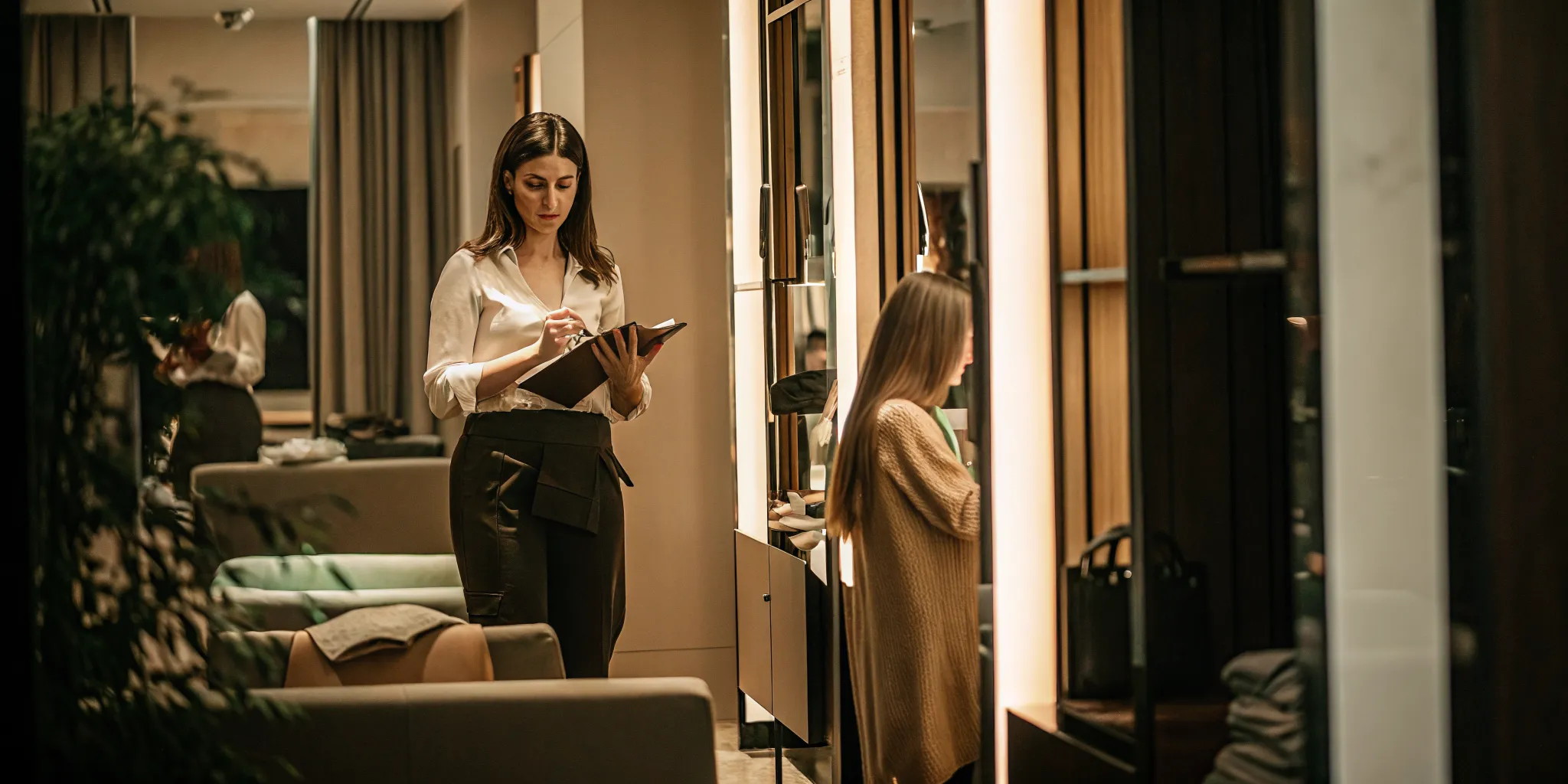
Bring measurements, a list of your highest-load equipment, and a written set of questions. Photos and notes make it easier to compare spaces later, provided the location permits photography. Avoid making the decision based only on finishes or first impressions.
Use this tour checklist
- Trace the client journey from parking and entry through checkout and departure.
- Test water pressure, sink placement, outlets, lighting, and ventilation.
- Measure the room and place each major workstation on a simple floor plan.
- Ask which expenses, furnishings, amenities, and maintenance services are included.
- Review lease term, renewal, deposit, access, signage, and customization rules.
- Meet the on-site team and ask how routine questions and urgent repairs are handled.
- Confirm local licensing, sanitation, insurance, and business requirements independently.
Evaluate support beyond the suite
The property team affects your business even when clients never see the work happening behind the scenes. Salons by JC locations feature a full-time Concierge Manager who can greet guests and support day-to-day location operations. Ask the Concierge Manager what support is available at the specific location, how communication works, and what current suite owners value most.
Also assess the common areas, restrooms, security, laundry access, and parking at the times you expect to work. These shared details influence client perception and can either reinforce or undermine the experience you create inside your suite.
Prepare for the transition to suite ownership
A successful move begins before the first client enters the new space. Build a transition plan that protects cash flow and makes the change easy for established clients. Confirm your license, insurance, business registration, local requirements, and lease responsibilities with the relevant authorities and qualified advisers.
Create a focused move-in plan
- Finalize your service menu, pricing, and appointment policies.
- Build a conservative budget that includes reserves and planned time off.
- Inventory equipment, products, sanitation supplies, and retail stock.
- Schedule move-in tasks so they do not disrupt booked appointments.
- Communicate the new location, parking, access, and arrival process to clients.
- Test booking, payment, Wi-Fi, lighting, plumbing, and equipment before opening day.
For a broader view of the decision, review what to know before renting a salon suite. The goal is not simply to open a room. It is to create an operating environment that protects your standards and supports the next stage of your career.
Frequently asked questions
How much space does a nail tech need in a salon suite?
The right size depends on your service mix and equipment. A manicure-focused business may work efficiently in a compact suite, while pedicure services, retail inventory, or multiple stations require more room. Measure every major item and verify that clients can move safely through the proposed layout.
Can I customize a private nail salon suite?
Customization rules vary by location and lease. Ask what is allowed for paint, fixtures, shelving, signage, lighting, and equipment installation. Get approval requirements in writing before purchasing materials or making changes.
What licenses do I need to rent a nail salon suite?
Requirements vary by state and municipality. You may need an active professional license, business registration, insurance, and location-specific approvals. Confirm requirements directly with your state licensing board, local authorities, and the suite operator before signing a lease.
What is the difference between a booth and a private suite?
A booth is generally a workstation within a shared salon environment. A private suite is an enclosed, lockable room that gives the professional more control over privacy, atmosphere, schedule, and brand presentation. Lease terms and included amenities vary, so compare the complete operating value.
Tour a private nail salon suite with Salons by JC
The best suite should work as hard as you do. It should support efficient appointments, protect the standards behind your reputation, and give you the freedom to shape every part of your client experience. Salons by JC combines private salon suites with premium amenities and a full-time Concierge Manager at every location.
Find a Salons by JC location and book your tour to see how a private suite could support your independent nail business.